 Uterine fibroids impact thirty to seventy five percent of ladies who are between the ages of 30 and 50. The distinction in stats is the outcome of the intensity of signs which might or might not bring a lady to her gynecologist for treatment. Signs which prevail in ladies who have uterine fibroids consist of sensations of heaviness in the pelvic area, heavy menstrual bleeding, urinary track problems and discomfort and pain. One choice for treatment is an endometrial ablation. (1 )
In a research study released in July 2006 in the Journal of Reproductive Medicine scientists released their findings and found that endometrial ablation is more cost-efficient for the treatment of heavy menstrual bleeding than is contraceptive pills or hysterectomy. (2 )
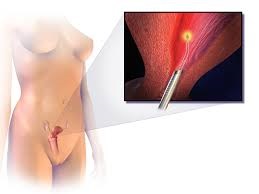
The treatment, endometrial ablation, was very first explained in the literature in 1980 and utilized a hysterocopic view to carry out the treatment. Utilizing this treatment, a surgical gadget is placed through the vaginal area, the cervix and into the uterus. The treatment gets rid of the lining of the uterus to assist in reducing menstrual circulation or stop it totally. This lining is usually lost on a month-to-month basis throughout the menstrual duration. The treatment does not need hospitalization and most ladies can go back to regular activities within a day or more. The treatment is an alternative to hysterectomy.
Following the preliminary advancement of the treatment, 2nd generation methods are being established to conquer the imperfections that surgeons discover with a hysterocopic view while continuing to keep the healing time brief. Other strategies remain in screening and in procedure of ending up being authorized. These strategies are advanced and less intrusive and they likewise bring less danger and females are discovering that results are much better.
One method is the microwave endometrial ablation strategy. Early case research studies utilize basic anesthesia however it is presently being done under anesthetic in the office. Those treatments performed in the office have a higher danger due to the fact that the uterus is not imagined throughout the treatment. A contrast research study of a microwave endometrial ablation treatment with other guidelines utilizing balloon innovation revealed that 94% of the clients were pleased with the MEA. Utilizing an MEA there is a 10% repeat surgery rate 12 months following the preliminary one. More research studies are required in order to identify if the treatment has actually appropriate danger carried out in the gynecologist office. (3 )
Physicians often choose to start treatment for heavy menstrual bleeding utilizing the least intrusive choices readily available, which are contraceptive pills. In one research study scientists discovered that contraceptives minimized menstrual bleeding by just 47%. Regrettably as soon as ladies stopped utilizing contraceptive pills, heavy bleeding returned. Females who go through endometrial ablation might utilize contraceptive pills for 3 months in order to help in reducing menstrual bleeding circulation prior to the treatment. (4 )
Long-term follow-up research studies of females who have actually gone through endometrial ablation discover that 5 years after treatment 95% of the ladies still report regular bleeding or less. It has a high rate of success for treatment of heavy durations however can successfully get rid of the possibilities of having any kids. For this factor the treatment is not advised for females who have actually not yet finished having children. (5 )
Risks from the treatment likewise can consist of blood loss, heat burns to the internal organs, electrical burns, perforation of the uterus (a hole in the uterine wall). The dangers are really genuine as the surgeon needs enough heat to get rid of a complete density of the uterine lining with the shallow myometrium. To reduce the danger of bleeding in perforation it is required to damage tissue approximately 5 mm deep.
This treatment is a considerable development in the treatment of heavy menstrual circulation for ladies who wish to keep their uterus and make sure that they have actually completed their families. Healing time is considerably less than it is for hysterectomies and it does not bring with it negative effects of early menopause. Whether ovaries are eliminated throughout a hysterectomy or not, the surgery of the hysterectomy will trigger a female to experience menopause earlier than she would have usually.
Uterine endometrial ablation brings with it much less run the risk of, a much shorter healing time and the capability to go through menopause when her body was currently pre-programmed to accomplish this turning point.
( 1) nationwide uterine fibroid structure: Statistics
http://www.nuff.org/health_statistics.htm(2)American Family
Physician: Treatment of Menorrhagia http://www.aafp.org/afp/2007/0615/p1813.html
( 3) United States Department of Health and Human Services: Microwave Endometrial Ablation
http://www.fda.gov/MedicalDevices/ProductsandMedicalProcedures/DeviceApprovalsandClearances/Recently-ApprovedDevices/ucm082313.htm(4)Cochrane Database Systematic Reviews: Oral contraceptive tablets for heavy menstrual bleeding http://www.ncbi.nlm.nih.gov/pubmed/10796696 (5)Human Reproduction: Uterine endometrial thermal balloon treatment for the treatment of menorrhagia: long-lasting multicentre
follow-up research study http://humrep.oxfordjournals.org/content/18/5/1082.full.pdf RESOURCES Archives of Gynecology and Obstetrics: Microwave Endometrial ablation as an Alternative to Hysterectomy http://www.ncbi.nlm.nih.gov/pmc/articles/PMC2701993/ American Family Physician: Treatment of
Menorrhagia http://www.aafp.org/afp/2007/0615/p1813.html